
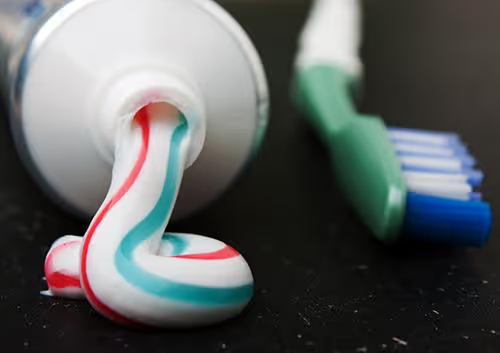
the doctor and our team recommend that you brush your teeth two to three times a day, for at least two minutes each time. But have you ever wondered what’s in toothpaste and how it actually works? The mouth is home to more than 500 types of microorganisms that feed on leftover food that gets stuck on and around your teeth. Toothpaste is the best line of defense against all those pesky microorganisms (especially when you brush two to three times a day). Here’s how it works.
Toothpaste contains mild abrasive additives that combat microorganisms and fight plaque. When you brush, the abrasives in toothpaste dislodge food particles and microorganisms more effectively than if you simply brush your teeth with water. The abrasives also work to remove food stains and polish the surface of the tooth. Some toothpastes include ingredients like triclosan and Xylitol. These chemicals prevent the growth of bacteria that produce plaque. Plaque not only causes cavities, but it can also lead to more dangerous issues like periodontal disease.
Fluoride is key ingredient in toothpaste. As the microorganisms in your mouth feed off the leftover food particles, they leave behind acid and sulfur byproducts that wear away the enamel of the teeth. This is the fancy, technical way of saying that the acid on your teeth causes cavities. As for the sulfur byproduct –well, that’s just a fancy, scientific name for bad breath. Fluoride works to fight the acid and help protect the teeth. By brushing, the fluoride is incorporated into the tooth enamel, which in turn makes the tooth more resistant to acid and plaque.
Flavoring and Sweetening Agents
Not all toothpaste tastes the same, right? The type of flavoring or sweetening agents added to the toothpaste doesn't have anything to do with fighting microorganisms and plaque, but taste is one of the most important selling points in finding a toothpaste brand you like. Flavoring agents mask the taste of some of the other ingredients in toothpaste, and without those agents chances are nobody would be brushing their teeth two to three time a day.
.avif)
Explore moreblog posts

Spring Cleaning

Why Is My Child Getting Cavities?